Onion Powder Price Per Kg: A B2B Purchasing Guide for Importers and Food Brands
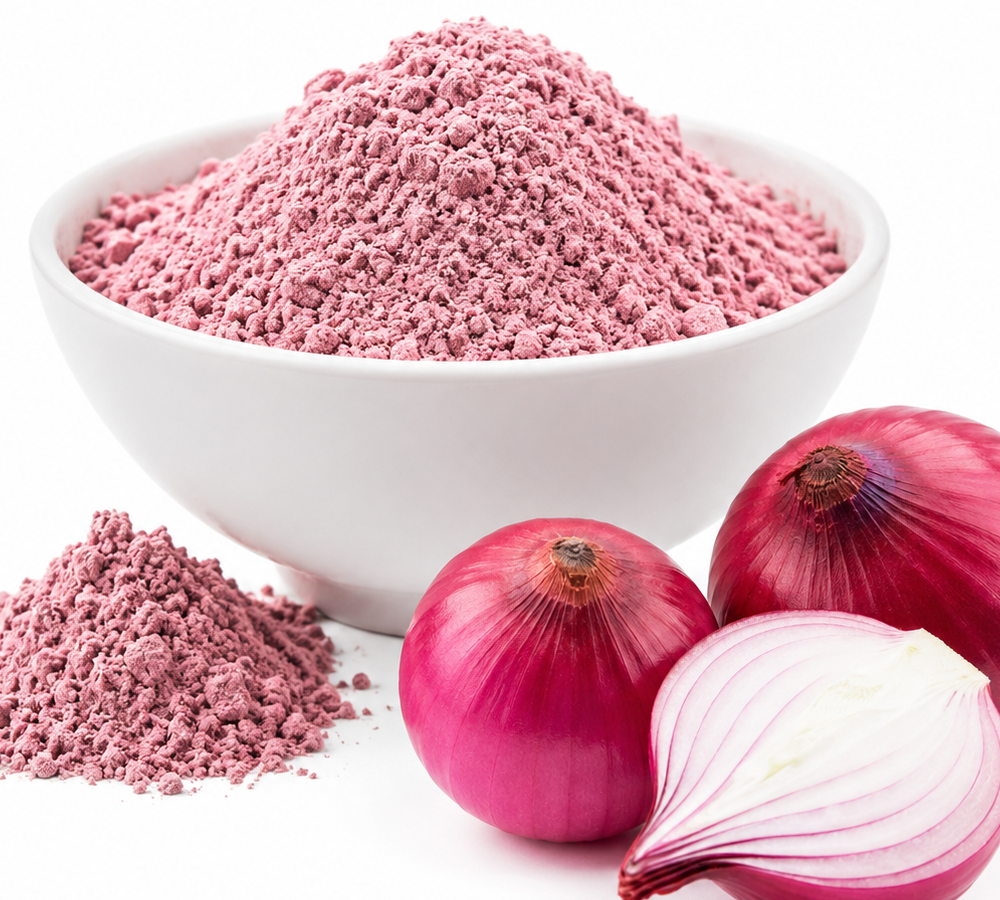
For importers, distributors, and food brands, the most accurate onion powder price per kg comes from a complete product specification—not from a generic online listing. Grade, onion variety, moisture, particle size, packaging, order quantity, destination, and shipping terms can all change the final landed cost.
Tradenest Naturals supplies dehydrated onion powder for food manufacturers, wholesalers, exporters, restaurants, snack companies, instant-food brands, and private-label businesses. This guide explains what to specify when comparing a wholesale onion powder offer and how to request a quotation that can be evaluated commercially and technically.
Onion Powder Exporter — Direct answer: what you receive and who should buy it
Bulk onion powder is a finely milled, dehydrated onion ingredient supplied in an agreed grade, mesh size, pack format, and export specification for commercial food production. It is suitable for buyers that need consistent onion flavour without the labour, waste, and short shelf life associated with fresh onions.
A commercial supply program may include:
- Dehydrated onion powder made from selected onion raw material.
- Standard or customer-specific particle sizes, including onion powder 80 mesh.
- Moisture-resistant food-grade packaging for domestic or international transport.
- Batch identification, manufacturing date, expiry or best-before information, net weight, and storage guidance.
- Specification and quality documents agreed before production.
- Bulk, wholesale, private-label, or OEM packing options.
Typical users include seasoning manufacturers, instant noodle and soup producers, snack and namkeen companies, sauce and dip brands, bakery businesses, ready-to-cook manufacturers, QSR chains, cloud kitchens, and ingredient distributors. A distributor may purchase standard bulk packs, while a retail or FMCG brand may require printed packaging, a defined mesh, and a more detailed approval process.
Product specifications that affect the quotation
The product specification should be finalized before price comparison because two products both called onion powder may have different performance and production costs.
Grade and raw material
Ask whether the powder is made from a defined onion variety, whether it contains any carrier or anti-caking ingredient, and whether the product is intended for seasoning, soup, sauces, snacks, bakery, or another application. A natural onion powder specification generally covers appearance, aroma, flavour, foreign matter, moisture, and microbiological limits.
For buyers requiring a clean-label ingredient, state clearly that no carrier, added colour, or other processing aid is permitted unless declared and approved. For seasoning blends, a standard grade may be sufficient; for infant, nutraceutical, or highly regulated applications, additional controls and documentation may be required.
Particle size and mesh
Mesh affects dispersion, mouthfeel, blending uniformity, dusting behaviour, and processing speed. Onion powder 80 mesh is a fine option for uniform seasoning blends, instant foods, soups, sauces, and applications where rapid hydration is useful. Coarser grades may be preferred when a stronger visual onion character or slower release is required.
Specify the target mesh, sieve tolerance, and whether the requirement is a single-pass or controlled-sieving specification. If the powder will be used in an automated dosing or high-speed blending line, share the equipment details so the manufacturer can recommend a practical grade.
Other technical details to confirm
- Moisture limit and water activity requirement, where applicable.
- Colour, aroma intensity, and flavour profile.
- Microbiological limits, including total plate count, yeast and mould, and pathogens.
- Allergen, GMO, irradiation, pesticide-residue, and heavy-metal requirements where relevant.
- Storage conditions and expected shelf life.
- Certificate of Analysis format and batch sampling method.
MOQ, packaging, and lead time
MOQ and lead time depend on product availability, order volume, packaging format, and customization level; standard bulk onion powder usually moves faster than private-label production.
Minimum order quantity
Standard onion powder can be evaluated for flexible MOQs based on current stock, production planning, and packing requirements. A customized formulation, special mesh, printed pouch, retail label, or OEM program may require a higher MOQ because materials and production runs must be planned in advance.
When requesting the onion powder bulk price, provide your expected trial quantity, monthly requirement, and annual forecast. This enables the supplier to separate a sample or trial quotation from a scalable contract price. Larger, repeat orders may improve the unit cost and help secure consistent raw-material planning.
Packaging options
Available formats may include 1 kg, 5 kg, 10 kg, 25 kg bags, bulk bags, stand-up pouches, PET jars, HDPE containers, and custom printed export packaging. The inner liner should be food-grade and moisture resistant, while the outer pack should withstand stacking, handling, and international transport.
Confirm whether the quoted price includes inner liners, cartons, pallets, labels, desiccants if required, and export marking. Every commercial pack should support traceability through batch number, manufacturing date, expiry or best-before date, net weight, storage instructions, and applicable regulatory information.
Lead time
Lead time is normally confirmed after approval of the specification, packaging artwork, order quantity, payment terms, and shipping plan. In-stock standard material can follow a shorter dispatch schedule; fresh production, special sieving, private label packing, or laboratory testing may add time. Ask for separate dates for artwork approval, production completion, dispatch, and estimated transit.
Certifications and quality assurance
A dependable onion powder manufacturer should demonstrate batch consistency, traceability, food-safety controls, and documentation appropriate for the destination market.
Tradenest Naturals applies a quality-focused process covering raw-material selection, dehydration, pulverizing, sieving, packing, and batch release. Buyers should request the documents needed for their market and application rather than assuming that every certificate applies to every product or shipment.
Typical quality and export documentation may include:
- Product specification sheet and Certificate of Analysis.
- Batch traceability records and packing details.
- Commercial invoice, packing list, and shipping documentation.
- Certificate of origin or other documents requested by the importer.
- Health, phytosanitary, fumigation, or conformity documents where required by the destination.
- Allergen, GMO, pesticide, heavy-metal, or microbiological declarations when applicable.
Before placing an order, share the importing country, HS-code guidance from your customs broker, local labelling rules, and any customer approval checklist. Tradenest Naturals reviews destination-specific requirements before production so the agreed product, label, documents, and packaging align with the transaction.
Applications and formulation value
Onion powder provides repeatable onion flavour, convenient dosing, and longer storage than fresh onion for dry and semi-liquid food systems.
- Seasonings: snack coatings, popcorn, fries, barbecue blends, pizza seasoning, peri-peri, and instant noodle masala.
- Soups and sauces: dry soup premixes, gravies, dips, marinades, and ready-to-cook bases.
- Bakery and savoury foods: crackers, savoury biscuits, breads, fillings, and prepared dough systems.
- Processed foods: meat alternatives, frozen foods, meal kits, convenience foods, and institutional recipes.
- Foodservice: restaurants, hotels, QSR kitchens, and cloud kitchens needing portion control and reduced preparation waste.
For formulation work, test hydration time, flavour strength, salt balance, caking behaviour, and compatibility with oils or liquid systems. Tradenest Naturals can support recipe development, ingredient replacement, texture improvement, and cost optimization where a standard powder needs to fit a specific formula.
What determines onion powder price per kg?
The onion powder wholesale price is determined by product quality, processing requirements, quantity, packaging, and delivery terms rather than by raw onion cost alone.
Important pricing factors include:
- Seasonal onion availability and raw-material quality.
- Dehydration yield, processing losses, and energy requirements.
- Powder fineness, including 80 mesh or other controlled sizes.
- Moisture, microbiological, residue, or customer-specific testing.
- Standard bulk packing versus private-label or retail packaging.
- Order volume, repeat schedule, and MOQ.
- Local transport, export handling, port charges, insurance, and freight.
- Incoterm, destination country, payment terms, and currency.
Therefore, a search for dehydrated onion powder price per kg should be treated as a starting point. The ex-works or FOB figure may look competitive while the final landed cost changes after freight, duties, customs clearance, testing, and local delivery are included. Ask suppliers to identify which costs are included in the offer.
How to request an accurate wholesale quotation
Send one complete buying brief so the onion powder exporter can quote the correct product and delivery basis without repeated clarification.
Include the following information:
- Product name and intended application.
- Required mesh, such as 80 mesh, or acceptable particle-size range.
- Target moisture, microbiological, allergen, and residue specifications.
- Required quantity for the first order and estimated monthly or annual volume.
- Packaging size, inner liner, pallet preference, and private-label requirements.
- Destination city, port, and country.
- Preferred Incoterm, such as EXW, FOB, CIF, or another agreed basis.
- Required documents, certifications, samples, and approval tests.
- Target delivery date and payment terms.
Request the quote in a comparable format: product price per kg, packing cost, testing or certification charges, minimum order, production lead time, freight basis, quote validity, and payment conditions. A professional dehydrated onion powder supplier should also clarify whether the offer is for a standard stock grade or made-to-order production.
Why work with Tradenest Naturals?
Tradenest Naturals combines manufacturing, bulk supply, private-label packing, and export support to help buyers move from product trial to repeat commercial supply.
As an India-based food ingredient manufacturer and bulk onion powder supplier, Tradenest Naturals focuses on consistent specifications, moisture control, batch traceability, food-safe packing, and responsive B2B service. Flexible MOQ evaluation supports emerging brands, while larger buyers can discuss planned production, custom packaging, and long-term supply arrangements.
Share your required grade, mesh, quantity, packaging, destination, and documentation checklist to receive a practical quotation for wholesale onion powder. Contact Tradenest Naturals for samples, technical discussion, private-label options, or a tailored export offer.
Looking to source these in bulk?
Tradenest Naturals supplies export-grade dehydrated and spray-dried food powders to importers and manufacturers worldwide. Request a quote and a free sample.
Standards & references

TRADENEST.INTERNATIONAL@gmail.com
Sourcing bulk food ingredients?
Talk to our export desk for pricing, samples, and specs.
1 Comment